Laura Dunn Nelson
Laura Dunn Nelson is Alchemy's Vice President of Business Development. She brings over 30 years of experience implementing food safety and quality control programs for processing, packaging, food service, and retail operations. She has worked with global retailers and manufacturers in the implementation of their food and workplace safety programs. Laura is a graduate of University of Texas with a Bachelor of Science in Microbiology.
Jun 24 2021
Jun 24 2021
Researchers at Cornell University have identified five new species of listeria in agricultural soil in the United States. The discovery is expected to help food manufacturers improve food safety by identifying potential new growth niches that previously may have been overlooked. And it could further help them understand the differences between pathogenic listeria and the non-pathogenic species.
Continue Reading →
Topics:
Food Safety Insights
Jun 7 2021
Jun 7 2021
Intertek Alchemy is joining the food industry to celebrate the third annual World Food Safety Day. The event, established by a United Nations resolution, offers an opportunity to honor everyone involved in growing, processing, transporting, selling, preparing, and serving the food that many of us take for granted.
The U.N. resolution states: “There is no food security without food safety, especially in a world where the food supply chain has become more complex.”
I could not agree more.
Continue Reading →
Topics:
Food Safety Insights
Apr 13 2021
Apr 13 2021
As we begin to see the light at the end of the tunnel of a disastrous year, one challenge refuses to go away. And that’s the continued threat of unsafe and contaminated food supplies.
Even with the stringent national and global regulations, we continue to see unsafe foods percolate throughout what we put on our tables and serve in restaurants. We’ve all seen the disturbing statistics. According to the World Health Organization, one in 10 people are sickened by eating food processed or prepared by others. And 420,000 people die each year from food-borne illness.
Continue Reading →
Topics:
Workplace Safety Tips
Sep 23 2020
Sep 23 2020
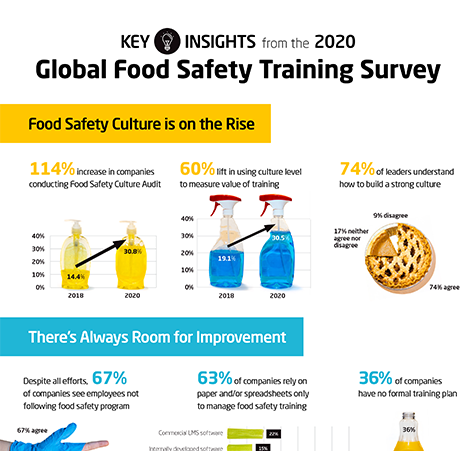
Intertek Alchemy released a new report analyzing the results from the 6th annual Global Food Safety Training Survey. Why is this big news? The survey contains valuable data on food safety training programs and identifies areas for improvement in food safety training — insight that can help all companies improve their own training programs.
Continue Reading →
Topics:
Food Safety Insights,
Training Best Practices
Apr 24 2020
Apr 24 2020
During the second installment of our Covid Communications webinar series, Intertek Alchemy joined forces with Julie Keich and Lynn Costanza of Campbell’s Snacks to highlight how one company in the food manufacturing and processing industry is navigating the “new normal”.
Continue Reading →
Topics:
Operational Tactics,
Workplace Safety Tips
Apr 21 2020
Apr 21 2020
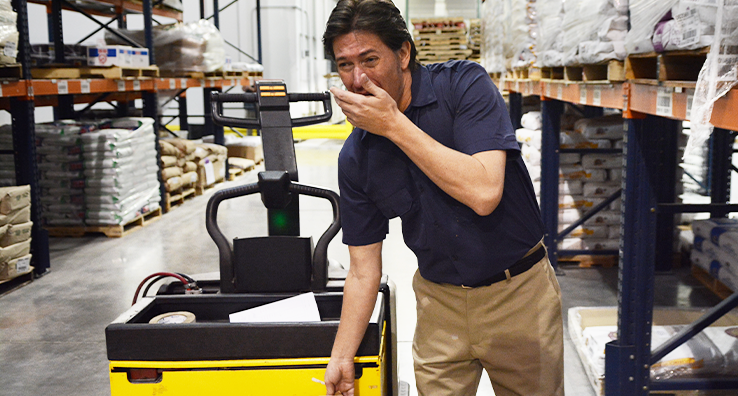
Last week during the second of our Covid Communictions webinar series, we asked attendees to share practical procedures and best practices they were carrying out in their facilities to prevent the spread of Covid-19.
Not surprisingly, the tips that followed were thoughtful, helpful, and showcased the forward-thinking required of all industry leaders during this unprecedented pandemic crisis:
Continue Reading →
Topics:
Operational Tactics,
Workplace Safety Tips
Jun 7 2019
Jun 7 2019
On behalf of my fellow Alchemists and consumers in every corner of the world, we extend a big thank you to the hard-working food safety professionals around the world in celebration of today – the world’s first ever annual Food Safety Day.
Continue Reading →
Topics:
Food Safety Insights,
Compliance Matters
May 25 2018
May 25 2018
The Food Safety Summit celebrated its 20th anniversary this year in Chicago, with a focus on food safety in the supply chain. From growers all the way to retailers, a common thread across the “chain” was the importance of employee engagement at all levels to ensure food safety.
Continue Reading →
Mar 26 2018
Mar 26 2018
We saw a real revolution underway at this year’s GFSI’s Global Food Safety Conference in Tokyo. Recent innovations in data and technology are making it possible for food companies to create more effective methods of advancing food safety. Likewise, customers are using technology to their advantage. They’re no longer passive in their purchases, and have become more empowered to make informed buying decisions and influence others.
Continue Reading →
Mar 14 2018
Mar 14 2018
Imagine three frontline workers: Jack, Mary, and Joe. It’s Jack's first week on the job. He goes through a day of intense onboarding training that includes everything from bathroom locations, to HR policies, to safety training. He is overwhelmed and really doesn't have all the knowledge or confidence he needs, and so he is uninformed. If a food safety decision comes up, he doesn’t know the right decision. He needs more training, experience and coaching to become a food safety expert for his job responsibilities.
Continue Reading →
Topics:
Food Safety Insights,
Training Best Practices
Aug 14 2017
Aug 14 2017
More and more food companies are making their training and learning systems a priority these days, and rightly so. After all, your frontline food workers are your biggest asset for keeping people and products safe. But are you evaluating your training to assess its true effectiveness? How do you know your training efforts and costs are paying off?
Continue Reading →
Topics:
Training Best Practices
Jul 18 2017
Jul 18 2017
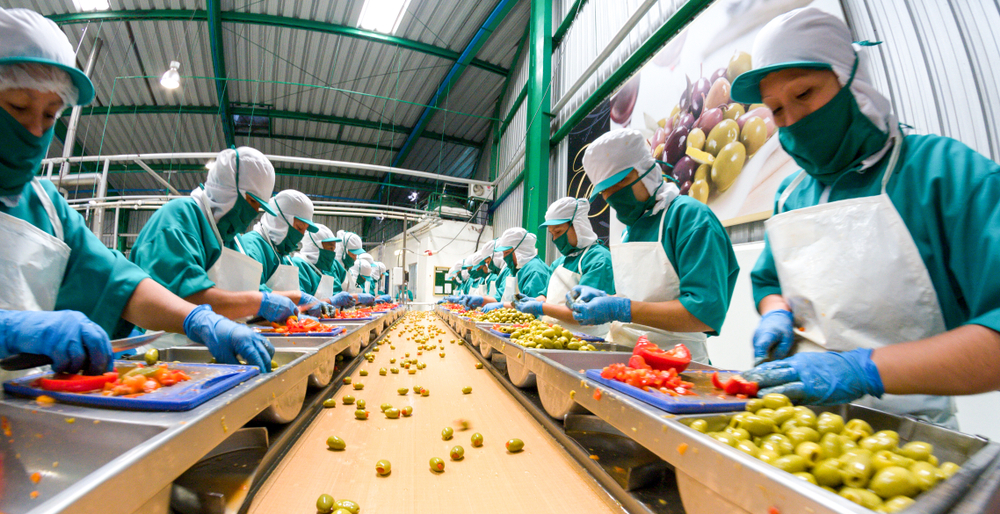
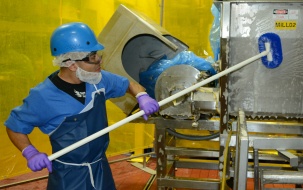
Food production operations generally devote an entire shift plus fully dedicated teams to painstakingly clean and sanitize their plants. It’s a critical element of each company’s food safety system. Cleaning and sanitation crews must know how to disassemble complex processing equipment, which cleaning solutions to apply, and how to apply them effectively.
Continue Reading →
Topics:
Food Safety Insights
May 4 2017
May 4 2017
In this excerpt from their 2016 Alchemy Conference presentation, three food safety experts—Doug Edmonson, Food Safety & Technology Consultant and Principal Owner at Edmonson & Associates Consulting, LeAnn Chuboff, Senior Technical Manager at SQFI, and Laura Dunn Nelson, VP Food Safety & Global Alliances at Alchemy—discuss the importance of communicating your food safety plan to employees and the need for refresher training.
Continue Reading →
Topics:
Training Best Practices
Apr 17 2017
Apr 17 2017
Alchemy headed to the British Retail Consortium’s Food Safety Americas conference April 4-5 in Orlando to network and learn more about the ongoing challenges and emerging opportunities in the fight for food safety. The conference agenda was packed with excellent presentations as usual. Here are some of the highlights:
Continue Reading →
Mar 14 2017
Mar 14 2017
Food processing companies go to great lengths to clean and sanitize their facilities frequently. Many plants devote an entire shift with dedicated sanitation crews to accomplish this important task. Cleaning and sanitation crews must know how to dismantle equipment, which chemicals to apply, and when and how to apply those chemicals effectively—all within a specified schedule of frequency of cleaning and sanitation. So, what could go wrong with this routine task?
Continue Reading →
Topics:
Training Best Practices