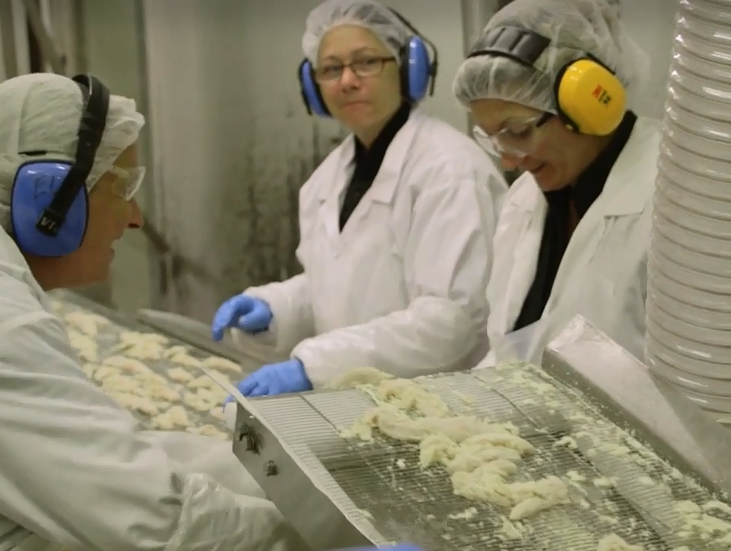

What went wrong? That’s the first question that comes to mind when any incident occurs. If an incident happens in your facility, learning what went wrong is just the first step in preventing future accidents. Using best practices for incident investigation paired with root-cause analysis can provide a solid foundation for fine tuning your serious-injury prevention strategy.
Prevent Workplace Injuries: A Guide to Incident Investigations & Corrective Action
Posted by Tara Guthrie
Topics: Workplace Safety Tips
Summer is here, and for some it’s a time of rest and relaxation, but for food workers it can be the most physically taxing time of the year. The thousands of workers who make their living while exposed to the heat—indoors or out—are at an increased risk during the dog days of summer. In the food industry, heat illness is an often overlooked occupational injury, but the good news is that heat-related hazards can be prevented or minimized.
Topics: Workplace Safety Tips, Compliance Matters
When organizations within the food industry attempt to comply with OSHA standards and regulations, there are three common compliance mistakes that I routinely observe as an auditor. Each could easily trigger an OSHA enforcement action. First, employers often fail to review relevant OSHA interpretation letters, directives, or the OSHA Field Operations Manual for guidance. Second, employers do not document non-recordable cases and reasons why they are not considered recordable. Finally, employers are not specific in the details when documenting a recordable event. To address these mistakes, I’ve outlined more specific information below on each to help you mitigate the risk of non-compliance – or worse, an enforcement action.
Topics: Workplace Safety Tips, Compliance Matters
The U.S. Poultry & Egg Association, National Chicken Council, and National Turkey Federation are concerned about OSHA’s recent attempts to expand the agency's authority - conducting wall-to-wall inspections of poultry processing facilities whenever they receive notice of any accident or employee complaint.
Like any employer, poultry processors are subject to inspections by the Occupational Safety and Health Administration (OSHA). Regardless, the poultry industry remains committed to the safety, health, and wellbeing of the frontline workforce. That commitment is demonstrated by the tremendous progress the poultry industry has made in reducing worker injury and illness rates, which have declined 81% in the last 20 years according to the 2014 Injury and Illness Report released by the Bureau of Labor Statistics.
In late April, the industry associations above released their official answer to OSHA's expanded inspections for poultry processors:
Topics: Workplace Safety Tips